From May 18 to 21, 2026, the STEP UP Project conducted the ‘Lab Protocol and STEM CPD Coaching & Mentoring Workshop’ was conducted for Mathematics, Science, and ICT teachers in Kep and Pailin provinces.
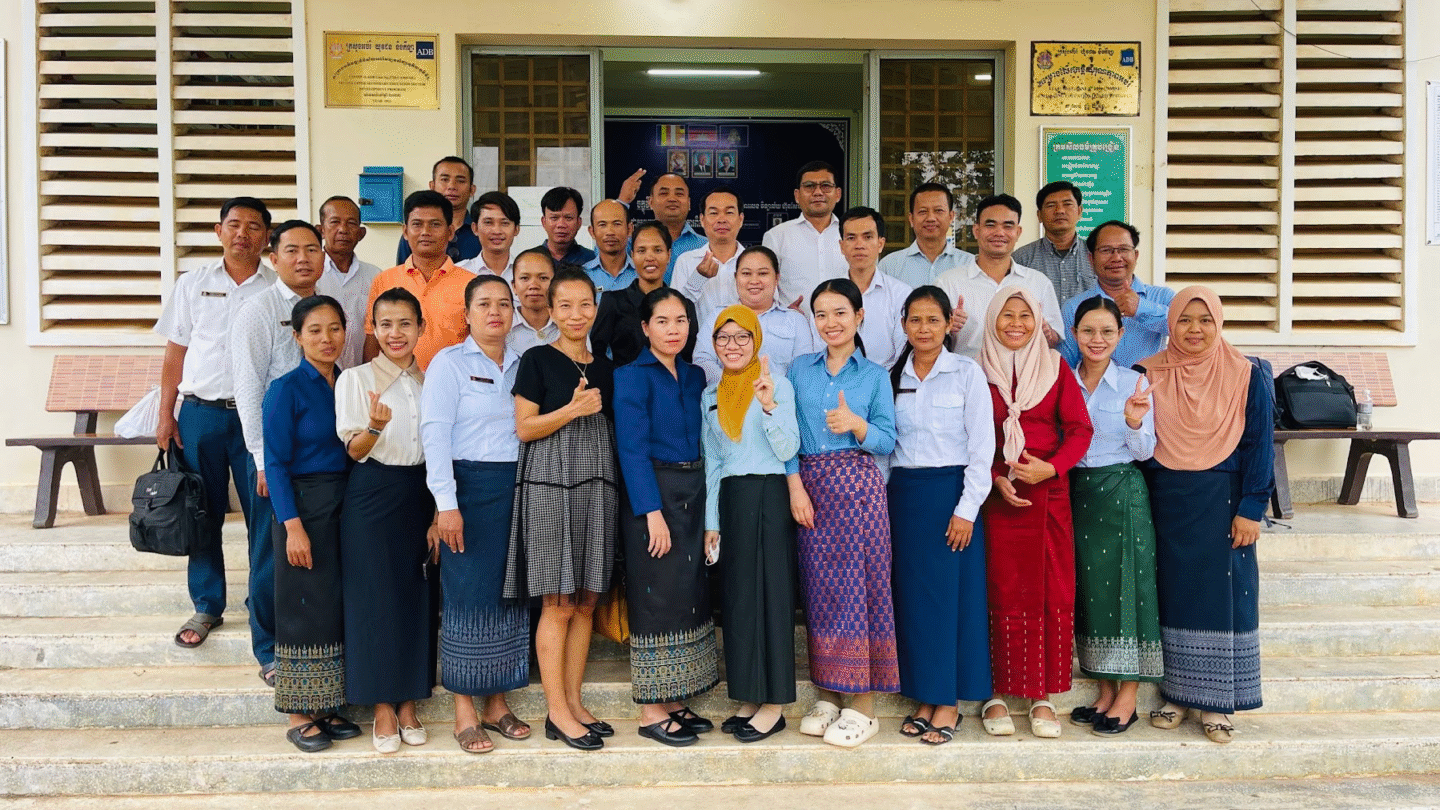
This workshop marked the first time a Coaching & Mentoring approach was introduced into the project’s CPD (Teacher Professional Development) program. The operational structure was carefully organized to ensure effective field application and quality control: Core Trainers conducted coaching and mentoring to the STEM Ambassadors under the EMCAST CPD Manager, who also provided direct coaching and mentoring to the participating teachers. Over the course of four days, the workshop was conducted separately at each of the two host schools: Hun Sen Chamkar Doung High School in Kep Province and Hun Sen Krung Tepnimit High School in Pailin Province, with a total of 63 teachers participating under the operation and support of EMCAST and the Core Trainers.
Clear and Practical Goals for the Field
This coaching and mentoring session was designed with specific, practical goals to support teachers directly in their school environments.
The first priority was to verify field sustainability by checking whether teachers are actively continuing what they learned and practiced in previous training modules within their actual classrooms. At the same time, the sessions sought to encourage and guide the participants by celebrating the areas where teachers are performing well, while providing immediate, practical mentoring for the specific challenges they face in delivering competency-based lessons. Lastly, the workshop aimed to identify follow-up support needs to determine exactly what kind of institutional and administrative support is required after the training to help teachers sustain these student-centered teaching methods.
Track-Specific Implementation and Key Activities
To closely monitor how teachers apply competency-based teaching and to provide targeted coaching, the field implementation was divided into two distinct tracks.
1. Science and Lab Protocol Track
In this track, teachers focused on experiment planning, preparation, and digital content creation to perform competency-based learning (in other words, student-centered learning).
- Planning: Teachers reviewed the guidebook, experiment manuals, and example videos from the National Institute of Education (NIE) to select experiment topics for Grades 10, 11, and 12. Under the guidance of the Core Trainers, they prepared and labeled materials and finalized their experiment plans.
- Production: Based on these plans, teachers conducted and recorded the experiments to create flipped learning videos. They practiced editing the footage using CapCut and added interactive elements, such as quizzes or links, using H5P so students can actively participate. They concluded their track by developing survey tools to evaluate lab protocols.
2. Mathematics and ICT Track
Parallel to the science track, the Mathematics and ICT track focused on curriculum design driven by teachers with teacher curriculum literacy and interactive video production for flipped learning.
- Teacher’s Curriculum Redesign: Teachers reviewed previous STEM CPD modules, and STEM teachers who completed three credits shared their lessons learned. Using Backward Design, the teachers designed curriculum units and wrote scenarios and scripts connecting mathematical concepts to real-life applications.
- Concept Video for Concept Understanding for Flipped Learning: Teachers filmed their concept videos based on the prepared scripts. Using ICT tools, they edited the footage in CapCut and converted them into interactive videos via H5P. The track concluded with teachers designing a survey tool to evaluate STEM CPD tools.
Next Action Plan and Commitments
To ensure that the skills developed during this workshop translate directly into daily classroom practice, the teachers at Hun Sen Chamkar Doung High School (Kep) committed to a clear timeline for their next deliverables:
- Grade 10 Curriculum Design (one semester): Due August 30, 2026
- Grade 10, 11, and 12 Curriculum Design (one semester): Due September 30, 2026
These deliverables are critical, as they will serve as the baseline and basis for the next round of coaching and mentoring follow-up.
Identified Follow-up Support Needs for Long-Term Sustainability
While the workshop marked successful progress, this first coaching and mentoring iteration also identified several critical follow-up tasks that the Ministry of Education, Youth and Sport (MoEYS) and individual schools must address to ensure these methods are sustained long-term:
- Upgrading Essential Classroom Infrastructure (Government & School Support Required): Field monitoring revealed clear technical barriers, such as malfunctioning LCD projectors in labs and limited Wi-Fi connectivity. Teachers also faced a lack of basic recording gear—including tripods, proper lighting, and microphones—which caused background noise and low video quality. Structural support is also needed for teachers who do not own computers or lack basic computer literacy.
- Continuous Teaching & Learning Support Systems (School Support Required): Since many teachers are still accustomed to traditional, lecture-based methods, they encounter difficulties in defining clear lesson objectives, choosing teaching methods, and writing critical-thinking questions. Ongoing school-level academic support is required to help teachers master concept-based teaching, design detailed curricula, deepen content knowledge (such as in physics), and draft real-life math application scripts.
- Institutionalizing Professional Learning Communities (School Administrators & MoEYS Support Required): Monitoring noted that some teachers who previously completed CPD courses did not actively share their knowledge or engage in a Professional Learning Community (PLC) back at their schools. To prevent knowledge isolation, MoEYS and school principals must structurally mandate and encourage internal PLCs so that trained teachers can naturally diffuse their skills to the rest of the faculty.