On the first morning, 82 mathematics, science, and ICT teachers gathered at Kampong Thom High School and Hun Sen Balang High School with different levels of experience, different subject backgrounds, and one shared challenge:
How can a lesson move beyond explanation and become something students can see, try, and experience?
Over four days, from July 8 to 11, 2026, the teachers took part in an intensive Coaching and Mentoring programme focused on laboratory protocols, STEM curriculum design, and digital learning content.
This was not a programme built around lectures alone. From the beginning, the participating teachers were expected to create.
Starting with an Idea
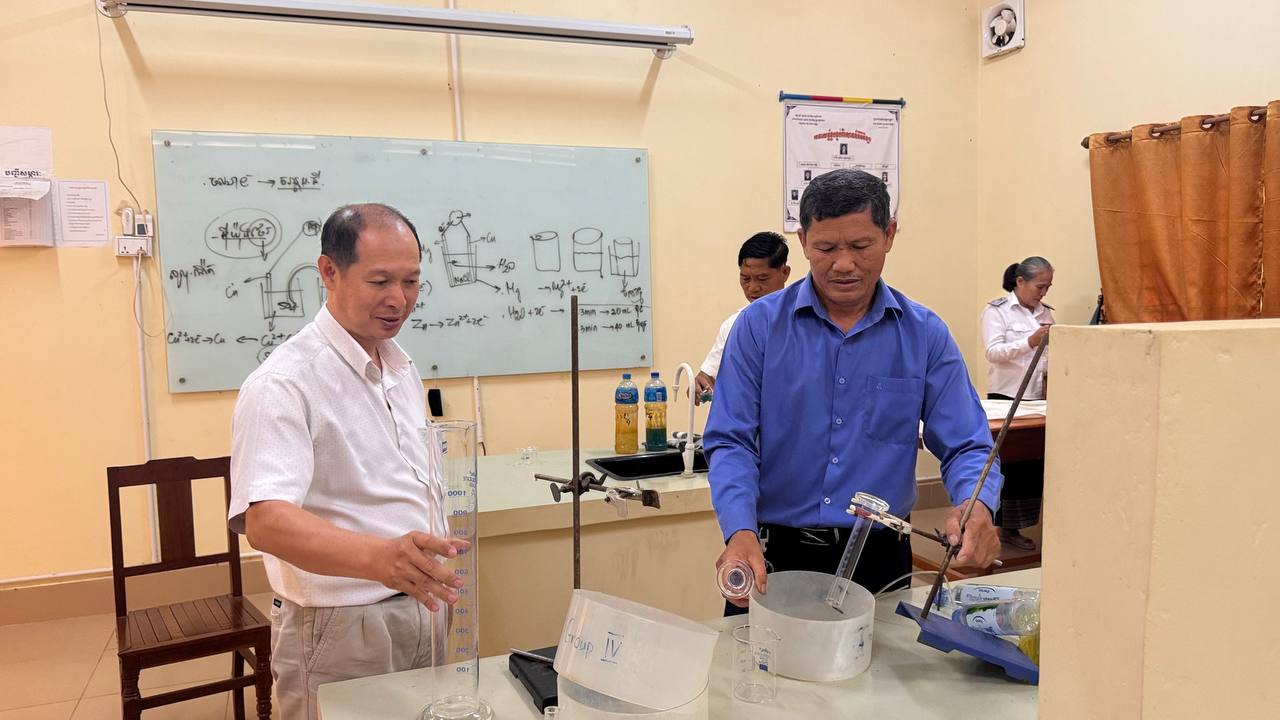
For the science teachers, the process began with selecting experiment topics for Grades 10, 11, and 12.
Each group reviewed existing experiment guides and demonstration videos, discussed suitable topics, checked the necessary laboratory materials, and developed a step-by-step experiment plan.
An experiment that may have started as a topic in a textbook gradually became something more concrete: a procedure to test, a demonstration to record, and a learning resource that could later be used in the classroom.
The teachers prepared their materials, rehearsed the process, recorded experiment videos, and reviewed the results together. Core trainers provided feedback on both the scientific procedure and the way the content was presented.
The first recording was not always the final one. Teachers adjusted their plans, corrected unclear steps, and considered how students would understand the experiment without the teacher standing beside them.
This cycle of planning, recording, reviewing, and improving became a central part of the four-day programme.
Connecting Lessons with Real Life
In the mathematics and ICT sessions, the work followed a different path but shared the same goal.
Teachers reviewed what they had learned through the STEM Continuing Professional Development programme and began designing curricula using Backward Design.
Instead of starting with classroom activities, they first considered the intended learning outcomes:
– What should students understand?
– How could that understanding be connected to a real-life situation?
– What kind of task or video could help students apply the concept?
From there, the teachers selected topics, developed curriculum plans, designed application-based exercises, and wrote scripts for concept videos.
They then moved from paper to production.
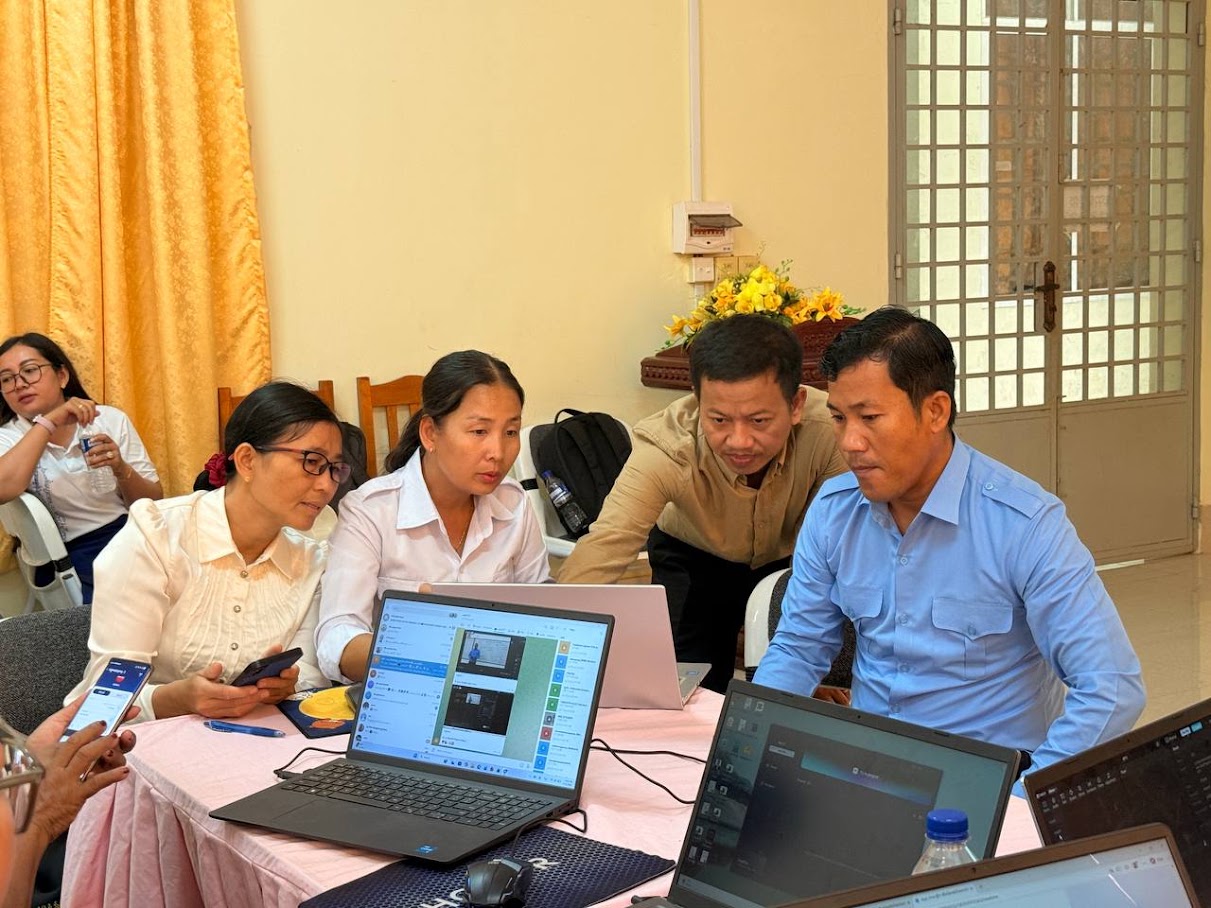
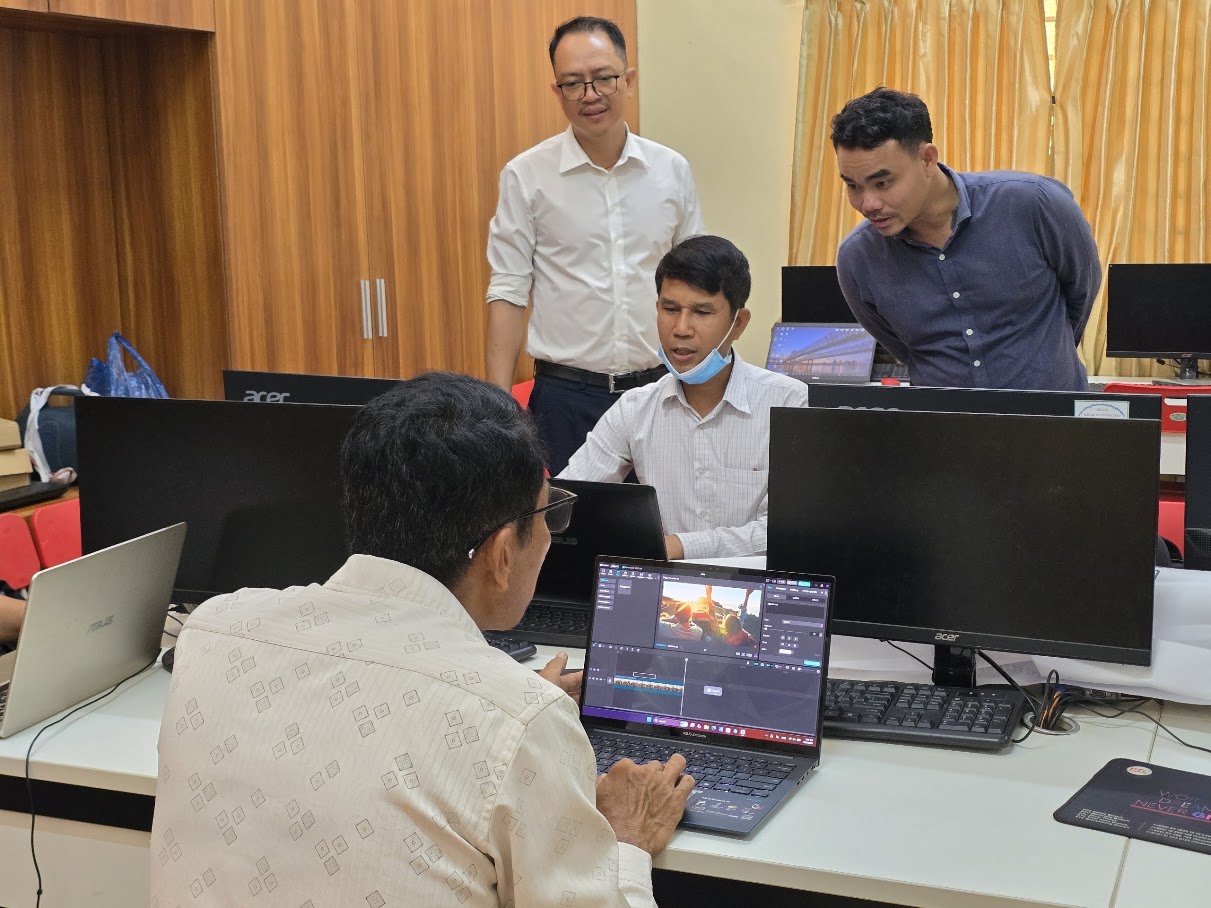
Teachers filmed their explanations, presented their curriculum designs to one another, and received feedback from trainers and fellow participants. ICT support sessions introduced them to CapCut for video editing and H5P for adding interactive elements to their content.
A mathematical concept was no longer only a formula written on a board. It became a story, an example, a recorded explanation, and an opportunity for students to interact with the lesson.
Learning Through the Difficulties
For many participants, producing digital educational content was completely new.
Some teachers had limited experience with video recording or computer programmes. Others faced unstable internet connections or needed more time to understand editing tools. Differences in previous CPD experience also influenced how quickly each group progressed.
These challenges were not separate from the learning process. They became part of it.
Teachers asked questions, repeated unfamiliar steps, supported one another, and improved their work through continuous coaching. Trainers were able to respond to real difficulties as they appeared, rather than only explaining tools in theory.
The programme showed that digital content creation is not simply about learning how to use software. It also requires teachers to rethink how they organise knowledge, explain a concept, anticipate student questions, and design a learning experience from the learner’s perspective.
By the Fourth Day
By the final day, the classrooms looked different from the way they had on the first morning.
Teachers were editing experiment and concept videos, adding interactive elements, presenting their work, and discussing how the materials could be improved and used in future lessons.
Across the two schools, participants had worked on:
The programme concluded with post-tests, evaluation, reflection, and follow-up plans for continued content development.
The Work Continues
The closing session marked the end of the four-day event, but not the end of the learning process.
Teachers from both schools will continue developing curriculum designs, experiment resources, and concept videos for different grade levels over the coming months.
That follow-up work is important because the real impact of professional development cannot be measured only by attendance or by the completion of a workshop.
It is seen later – in the lesson plans teachers revise, the resources they create, the experiments students are able to observe, and the opportunities learners receive to connect classroom knowledge with real life.
In Kampong Thom, the four-day programme began with teachers learning new approaches.
It ended with teachers beginning to create learning experiences of their own.