Have you ever sat in a classroom and felt like certain subjects just weren’t meant for you?
In Cambodia, an invisible wall often stands between young girls or vulnerable students and the world of STEM (Science, Technology, Engineering, and Mathematics). Sometimes it’s a casual comment like “science is for boys,” and other times it’s a lack of support for students from underprivileged backgrounds.
To break down these invisible walls, Cambodia’s Ministry of Education is looking beyond just buying new lab equipment – they are focusing on the heartbeat of the classroom: the teachers.
Recently, from June 19 to 21, 2026, the STEP UP project hosted a three-day GESI (Gender Equality and Social Inclusion) Offline Seminar at the National Institute of Education (NIE) to tackle this challenge head-on.
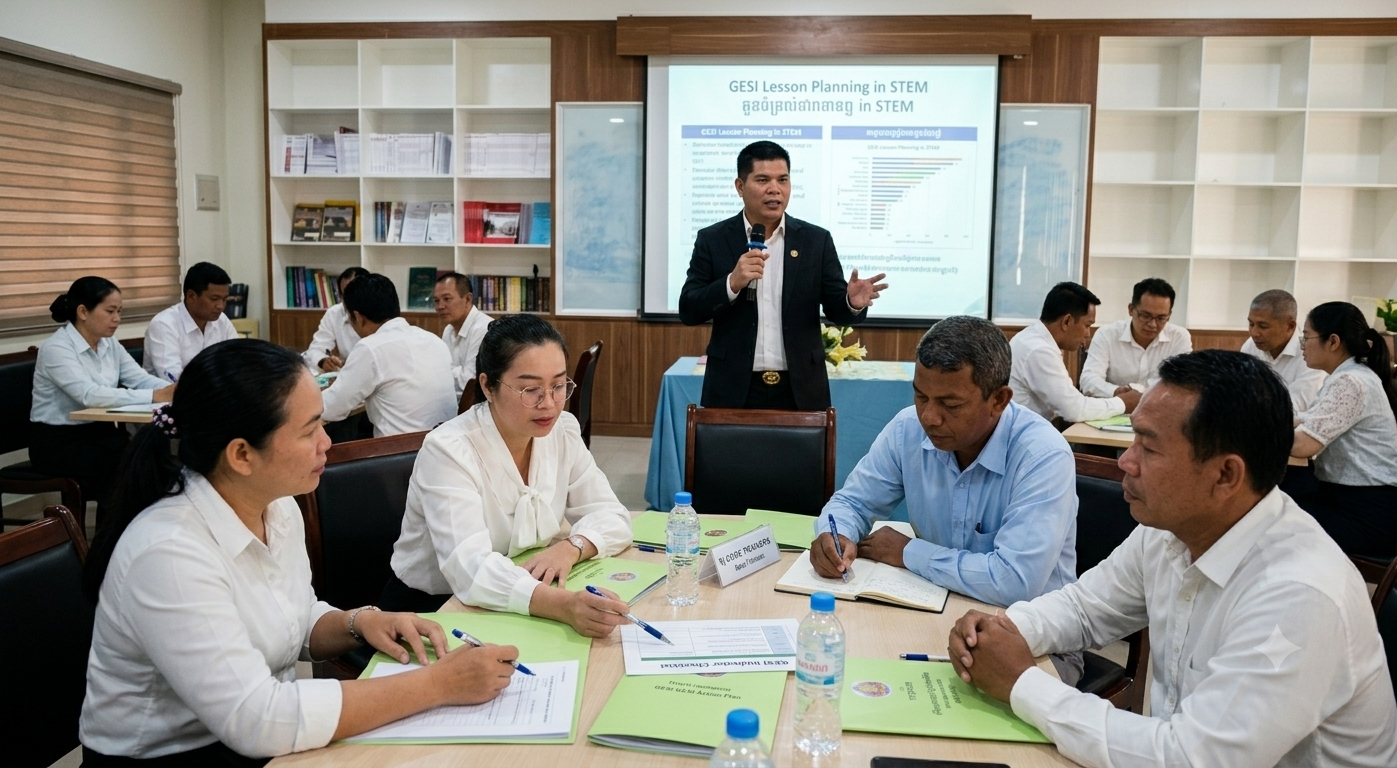
👥 The Strategic Role of Our 35 Core Trainers
The seminar brought together 35 Core Trainers, consisting of educational experts from the Department of Policy and faculty members from Cambodia’s Teachers Colleges.
By focusing on these trainers rather than individual school teachers, the STEP UP project aims for a multiplier effect. Because these professionals are responsible for preparing Cambodia’s future teaching workforce, integrating the GESI framework into their curriculum ensures a scalable and lasting impact on thousands of future educators and students nationwide.
📅 A 3-Day Journey: From Concept to Classroom Action
The three-day seminar at the National Institute of Education (NIE) was structured as a step-by-step journey, moving from building awareness to taking concrete action.
Here is how the trainers spent their three days:
- Day 1: Laying the Groundwork
The seminar opened with remarks from H.E. Dr. Seing Sovanna, Director of NIE. The trainers spent the first day defining gender equality and equity within the educational context. They also analyzed the roots of gender stereotypes in Cambodian society and discussed how these mindsets quietly impact a student’s choices and education. - Day 2: Focusing on the STEM Classroom
On the second day, the focus shifted entirely to STEM education. Trainers worked on identifying the practical barriers that often keep female and vulnerable students from participating in science and math. They brainstormed ways to design inclusive learning environments and discussed how to adapt everyday teaching materials and assessments. - Day 3: Developing Concrete Lesson Plans
The final day was dedicated to hands-on application. Divided into their respective subject groups, Mathematics, Physics, Chemistry, Biology, Earth Science, and Information Science (ICT), the trainers designed gender-responsive STEM lesson plans to be used in Teachers Colleges. They concluded with group feedback sessions to ensure the plans were practical and ready for actual classrooms.
🌿 Small Shifts, Bigger Impact
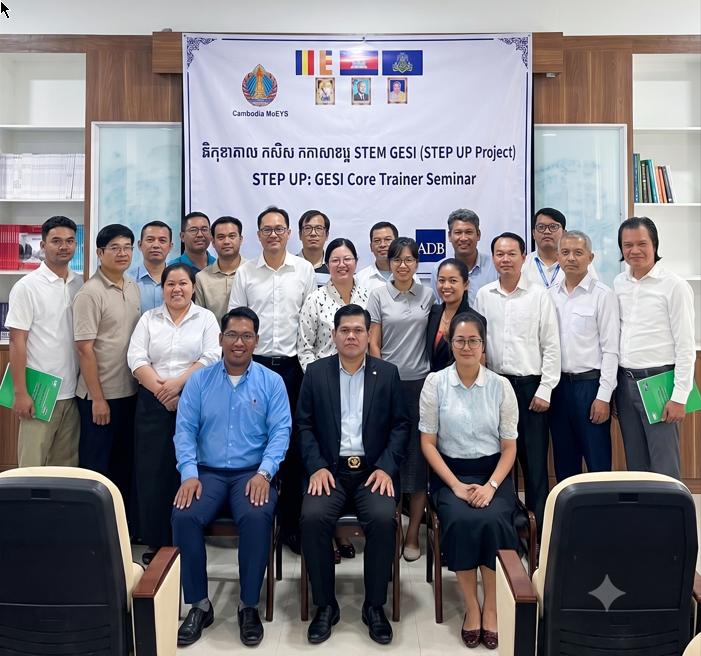
While ensuring full three-day attendance was a practical challenge for these busy experts, their commitment made the seminar a true success. Real educational reform begins with these small, intentional changes like adjusting a math problem or reshaping a science experiment to be more inclusive.
We extend our sincere gratitude to the National Institute of Education (NIE), the Department of Policy, CPD Manager Mr. Chun Sokchea, and all 35 core trainers for their dedication to driving meaningful change in Cambodia’s classrooms.